



What Are Single Vision Lenses?
If you wear glasses or are considering getting a prescription, you have likely come across the term single vision lenses. But what is a single vision lens exactly? Simply put, these lenses are designed to correct vision for one specific distance—either near or far. They are the most common type of prescription lenses and are widely used by individuals with myopia (nearsightedness), hyperopia (farsightedness), astigmatism, or presbyopia.In this guide, we will explore everything you need to know about single vision lenses, including how they work, their benefits, how they compare to other lens types, and whether they are the right choice for you.
How Do Single Vision Lenses Work?
These lenses work by bending light as it enters the eye, ensuring that it correctly focuses on the retina. Depending on the prescription, single vision lenses can be:
- Concave lenses – Thinner in the middle and thicker at the edges to correct nearsightedness (myopia).
- Convex lenses – Thicker in the middle and thinner at the edges to correct farsightedness (hyperopia).
- Cylindrical lenses – Designed for astigmatism, these lenses correct the irregular curvature of the cornea.

How Single Vision Lenses Differ from Other Lens Types
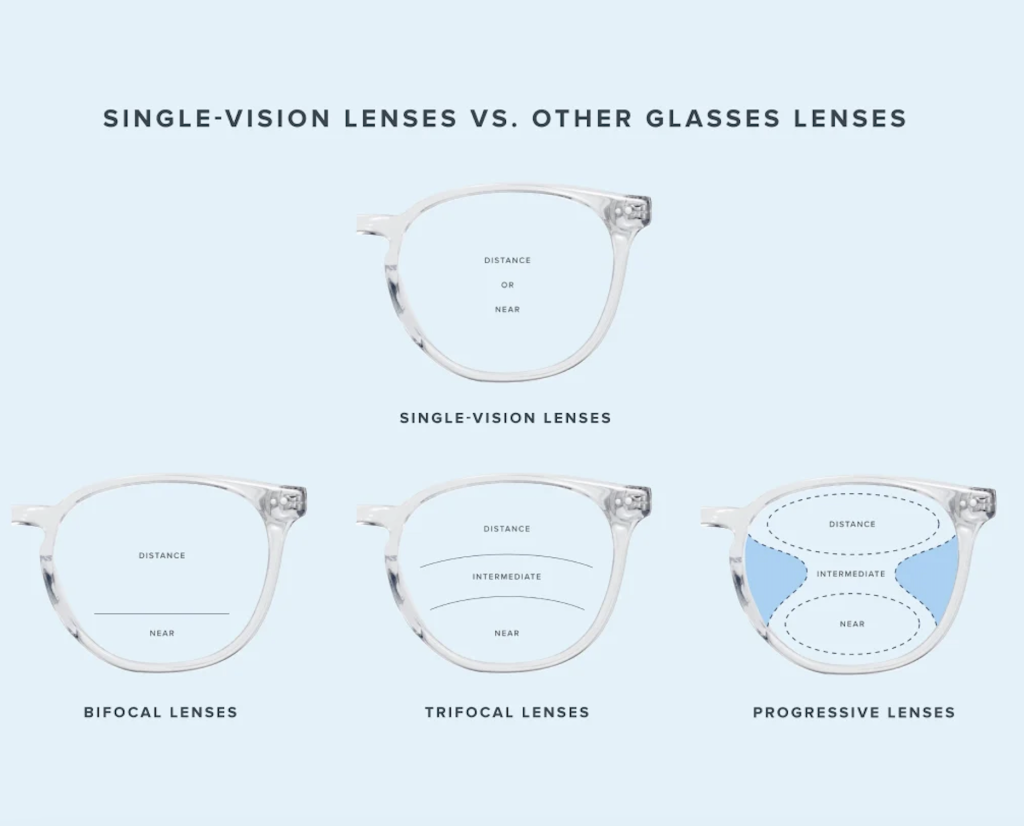
Single vision lenses are designed to correct a single field of vision—either near or distance—across the entire lens. However, there are several types of single vision lenses that differentiate them from other lens types, such as bifocal or progressive lenses. These variations are based on the material, thickness, and added features, making them unique in their purpose and functionality. Here’s how single vision lenses compare:
- Standard Single Vision Lenses
- High-Index Single Vision Lenses
- Blue Light Blocking Single Vision Lenses
- Photochromic Single Vision Lenses
Ready to Improve Your Vision?
Book an eye test with a qualified optometrist to find out if single vision lenses are right for you! Once you have your prescription, explore a wide range of designer prescription glasses and sunglasses at Sunglasses.ie. As Ireland’s premier eyewear retailer, they offer thousands of frames from top brands, ensuring you find the perfect pair for style and comfort. Whether you need everyday glasses or sports-specific prescription sunglasses, Sunglasses.ie has you covered!
Single Vision vs. Bifocal Lenses
| Feature | Single Vision Lenses | Bifocal Lenses |
| Prescription Zones | One | Two |
| Corrects | Either near or distance vision | Both near and far vision |
| Visible Line | No | Yes |
| Best for | Individuals with a single vision issue | Those with presbyopia or multiple vision issues |
Single Vision vs. Progressive Lenses
| Feature | Single Vision Lenses | Progressive Lenses |
| Prescription Zones | One | Three (near, intermediate, distance) |
| Visual Transition | No transition | Smooth transition between vision zones |
| Visible Line | No | No |
| Best for | People with one vision problem | Those who need multiple vision corrections in one lens |
Are Single Vision Lenses Right for You?
Benefits of Single Vision Lenses
✔ Affordable – Typically cheaper than multifocal lenses.
✔ Easy to Adapt To – No adjustment period, unlike progressives.
✔ Crisp Vision – Provides clear sight for a specific distance.
✔ Available in Multiple Styles – Can be customized with different coatings and lens materials.
Limitations of Single Vision Lenses
✖ Limited Functionality – If you need both near and distance correction, you may require multiple pairs.
✖ Frequent Switching – People with presbyopia may need to switch between reading and distance glasses.
How Much Do Single Vision Lenses Cost?
The cost of single vision lenses varies based on factors such as:
- Lens material (plastic, polycarbonate, high-index).
- Coatings (anti-glare, scratch-resistant, blue light filtering).
- Brand and retailer.
Some optical stores offer free standard single vision lenses with glasses, while premium versions (e.g., thin and lightweight lenses) may cost extra.
Final Thoughts: Should You Get Single Vision Lenses?
Single vision lenses are the most commonly prescribed lenses for people who need correction for one specific distance—whether it’s for reading, distance vision, or astigmatism. They offer affordability, clarity, and ease of use, making them a great choice for many individuals.
However, if you require correction for multiple distances, you might need progressive or bifocal lenses instead. Consulting with an optometrist will help determine the best lens type for your vision needs.